

Target Audience: Event Planners, Marketing Managers, PR Directors, Venue Operators
Reading Time: 15 minutes
Last Updated: December 2025
This AV Production Complete guide covers everything from lighting & visual integration to audio systems for professional Hong Kong events. Whether you’re planning corporate launches, concerts, or exhibitions, mastering event AV production is essential for creating memorable experiences.
What is Event AV Production? {#definition}
Event AV Production (Audio-Visual Production) refers to the professional service that integrates audio systems, video projection, and stage lighting to create immersive experiences for live events. Whether it’s corporate launches, product showcases, concerts, or wedding banquets, professional AV production significantly enhances event quality and audience engagement.
Why is AV Production So Important?
According to the 2024 International Association of Exhibitions and Events (IAEE) report:
- Events using professional AV equipment see 67% increase in audience engagement
- Presentations with high-quality audio show 53% better message retention
- Dynamic lighting effects can boost brand recognition by 41%
- Post-event social media sharing increases by 78%
A successful event requires not just quality content, but also AV technology to perfectly deliver that content to every participant.
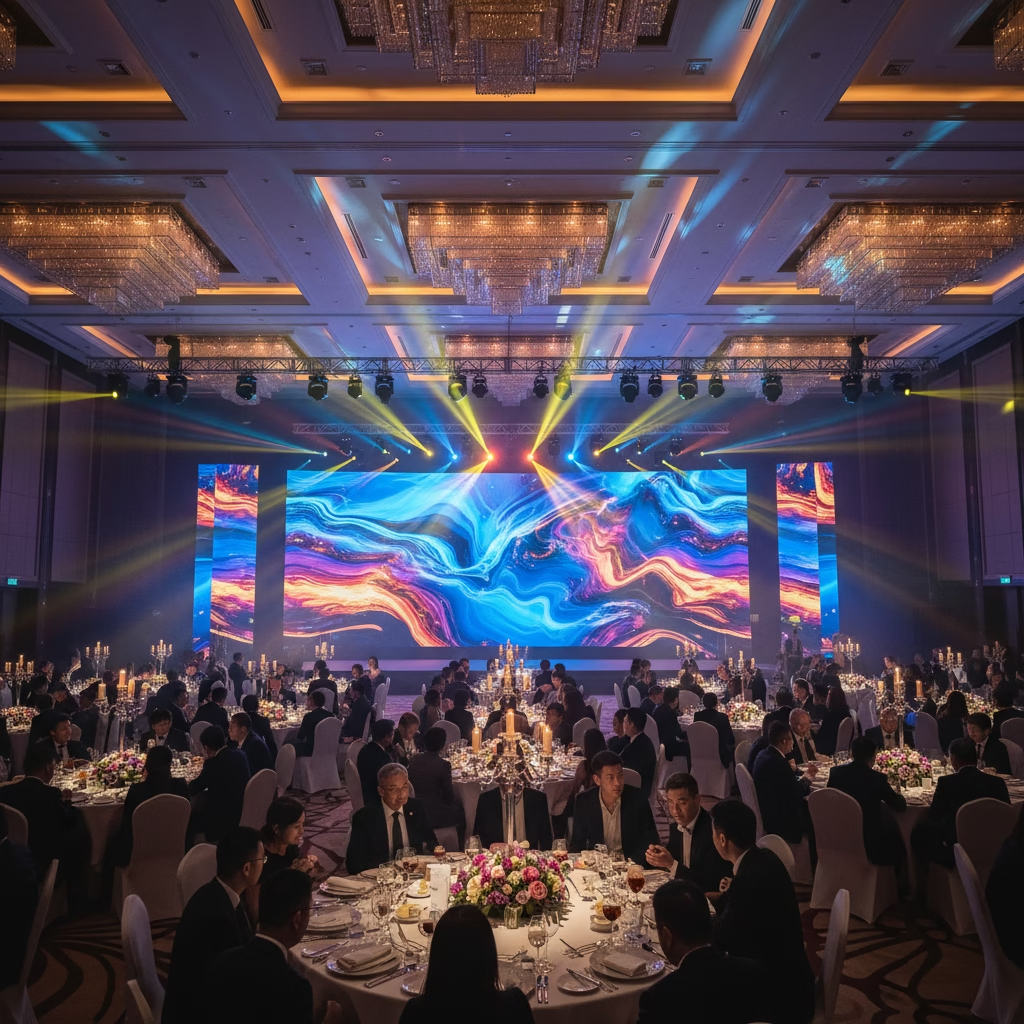
Three Core AV Systems {#core-systems}
1. Audio System: Clearly Delivering Every Word
The audio system is the nervous system of an event, responsible for accurately conveying speakers’ voices, background music, and sound effects to all audience members.
Audio System Components
| Equipment Type | Function | Suitable Scenarios | Price Range (HKD) |
|---|---|---|---|
| Main PA Speakers | Full venue coverage | All events | 60,000-400,000 |
| Monitor Speakers | Stage foldback | Stage performances, speeches | 25,000-120,000 |
| Wireless Microphones | Mobile audio capture | Speeches, interviews | 12,000-65,000/set |
| Mixing Console | Audio control | Medium to large events | 40,000-250,000 |
| Digital Audio Processor | Sound optimization, feedback elimination | Professional events | 35,000-160,000 |
Audio Configuration Best Practices
Small Events (50-100 people)
- 2 main speakers (left/right channel)
- 1-2 wireless microphones
- Basic mixer
- Budget: Approximately HK$65,000-120,000
Medium Events (100-500 people)
- 4-6 main PA systems
- 2-4 subwoofers
- 4-6 wireless microphones
- Professional digital mixing console
- Budget: Approximately HK$240,000-650,000
Large Events (500+ people)
- Line Array sound system
- Multi-zone delay speakers
- Complete monitor system
- Digital audio network architecture
- Budget: HK$1,200,000+
Common Audio Problems & Solutions
Problem 1: Feedback Squealing
- Cause: Microphone too close to speakers or gain too high
- Solution: Use 31-band equalizer to adjust frequency, reduce volume, change microphone angle
Problem 2: Uneven Volume Distribution
- Cause: Poor venue acoustics, improper speaker placement
- Solution: Conduct acoustic testing beforehand, add delay speakers to fill dead zones
Problem 3: Unclear, Muddy Sound
- Cause: Excessive venue reverberation, incorrect EQ settings
- Solution: Adjust mid-high frequency EQ, use directional microphones, add sound absorption materials
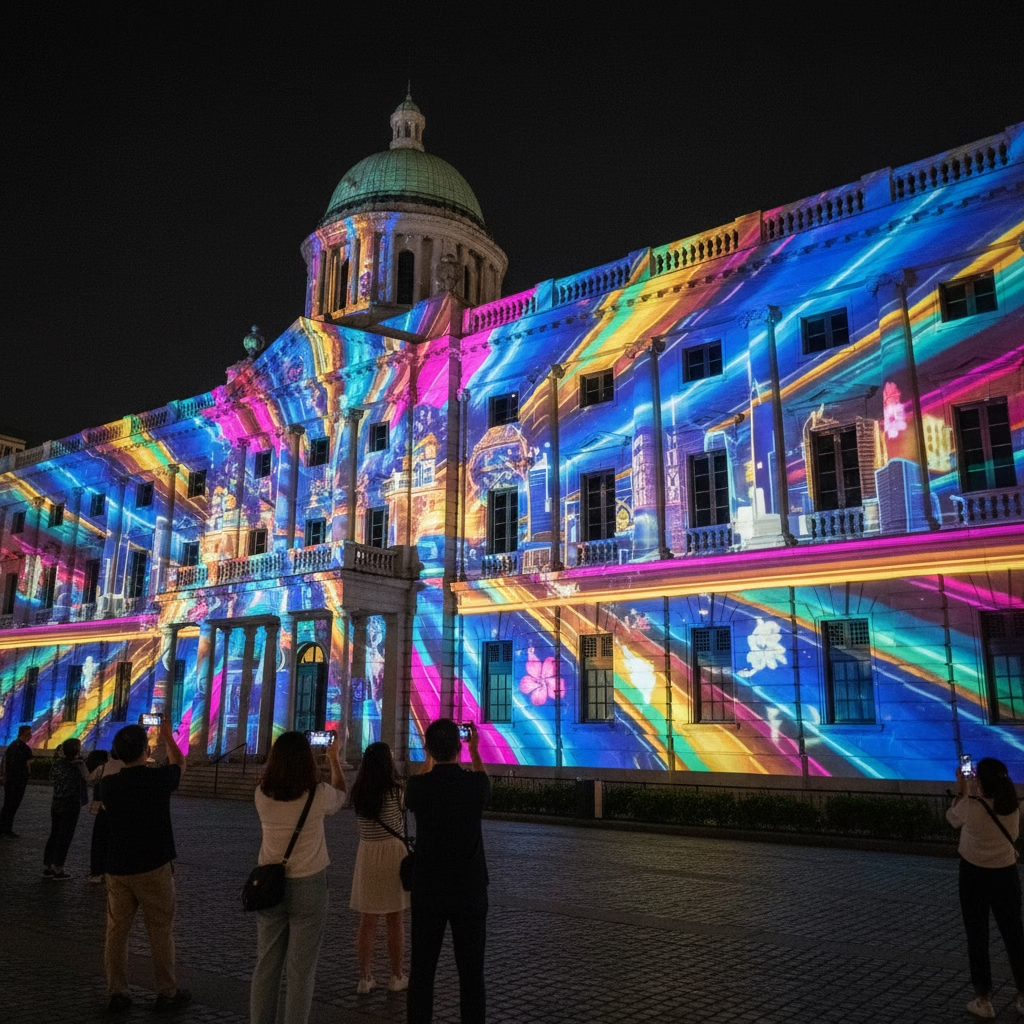
2. Video Projection System: Key to Visual Impact
The video system uses projectors, LED screens, and live streaming equipment to present slides, videos, and real-time footage to the audience.
Projection Equipment Comparison
| Equipment Type | Brightness (Lumens) | Suitable Scenarios | Advantages | Disadvantages | Rental Price/Day |
|---|---|---|---|---|---|
| Business Projector | 3,000-5,000 | Small meeting rooms | Portable, affordable | Limited brightness | HK$2,500-6,500 |
| Professional Projector | 5,000-15,000 | Medium to large events | High brightness | Requires professional installation | HK$12,000-40,000 |
| Laser Projector | 10,000-30,000 | Large exhibitions | Ultra-high brightness, long lifespan | Expensive | HK$65,000-160,000 |
| LED Display Screen | – | Outdoor/large events | Unaffected by ambient light | Resolution limitations | HK$40,000-240,000 |
Video Content Production Guidelines
Presentation Design Golden Rules
- Font Size: Minimum 28pt (recommended 36-48pt)
- Contrast: Dark background with light text, or vice versa
- Animation Effects: Keep it simple, avoid excessive animations that distract
- Aspect Ratio: Prioritize 16:9, avoid 4:3 which creates black bars
- Brand Colors: Maintain consistent color scheme throughout to strengthen brand recall
Video Content Specifications
- Resolution: Full HD (1920×1080) or 4K (3840×2160)
- Format: MP4 (H.264 encoding)
- Aspect Ratio: 16:9
- Audio: AAC or PCM, stereo
- Bitrate: Recommended 10-20 Mbps
3. Stage Lighting System: The Magician of Atmosphere
Lighting is not just an illumination tool, but a key element for emotional guidance and spatial creation. Professional lighting design can transform ordinary spaces into stunning stages.
Lighting Equipment Types & Applications
Basic Lighting Fixtures
| Fixture Type | Characteristics | Suitable Scenarios | Power | Rental Price/Day |
|---|---|---|---|---|
| PAR Lights | Wash, color | Basic stage lighting | 150-1000W | HK$400-1,600 |
| LED PAR Lights | RGB color mixing, energy-efficient | Atmosphere creation | 50-200W | HK$800-2,400 |
| Profile Spotlight | Precise focus, pattern projection | Speaker tracking, logo projection | 300-1000W | HK$2,400-8,000 |
| Moving Head Light | Dynamic effects, color changes | Concerts, galas | 200-700W | HK$4,000-16,000 |
| LED Strips/Wall Washers | Architectural contours, background coloring | Exhibition halls, banquet halls | 30-100W/meter | HK$400-1,600/meter |
Lighting Color Psychology
Different color temperatures and colors trigger specific emotional responses from audiences:
Warm Tones (2700-3500K)
- Suitable for: Galas, award ceremonies, brand launches
- Emotional Effect: Warm, intimate, relaxed, premium feel
- Common Colors: Amber, gold, orange-red
Neutral White (4000-5000K)
- Suitable for: Corporate meetings, seminars, product demonstrations
- Emotional Effect: Professional, clear, rational, focused attention
- Common Colors: Pure white light
Cool Tones (5500-6500K)
- Suitable for: Tech launches, fashion shows, esports events
- Emotional Effect: Tech-savvy, energetic, innovative, avant-garde
- Common Colors: Blue, cyan, cool white
Colored Light Effects
- Red: Passion, alert, power (use cautiously, may cause tension)
- Blue: Calm, professional, tech, trust
- Green: Natural, health, eco-friendly, growth
- Purple: Luxurious, mysterious, creative, spiritual
- Pink: Romantic, gentle, youthful, lively
Five Principles of Lighting Design
1. Visibility Principle Primary mission is ensuring speakers and performers are clearly visible. Front light angle recommended at 45-60 degrees to avoid harsh shadows.
2. Dimensionality Principle Use front light, side light, and backlight to create depth, avoiding flat appearance. Three-point lighting is the classic setup.
3. Focus Principle Use spotlights or profile lights to guide audience attention, highlighting key people or objects.
4. Mood Principle Create specific emotions through color, brightness, and dynamic changes, adjusting to the event’s rhythm.
5. Brand Consistency Principle Integrate corporate identity colors to strengthen brand image. For example, tech companies often use blue, eco-brands use green.
Professional Lighting Design Guide {#lighting-guide}
Lighting Configurations for Different Event Types
Corporate Annual Gala/Dinner
Lighting Requirements:
- Stage main light: 8-12 LED PAR lights (RGB)
- Follow spotlights: 2-3 units (tracking hosts, award presenters)
- Background wash: LED strips or wall washers
- Table ambient lights: Warm white small LED lights
- Dynamic effects: 4-6 moving head lights
Budget Allocation:
- Small (100-200 people): HK$120,000-240,000
- Medium (200-500 people): HK$320,000-650,000
- Large (500+ people): HK$800,000+
Design Focus:
- Use warm light during entrance for welcoming atmosphere
- Switch to dynamic colored lights for performance segments
- Use follow spots during award ceremonies
- Dim lights to 50-60% during dining
Product Launch
Lighting Requirements:
- Product display area spotlights: 4-6 units
- Presentation area front light: Pure white LED
- Brand color background light: Color-adjustable LED system
- Logo projection lights: 2-4 Gobo lights
- Audience fill light: Soft white light
Design Focus:
- Product area illumination should reach 800-1200 lux
- Presentation area should avoid screen glare
- Consistently use brand identity colors throughout venue
- Design light show for key moments (unveiling)
Concert/Music Festival
Lighting Requirements:
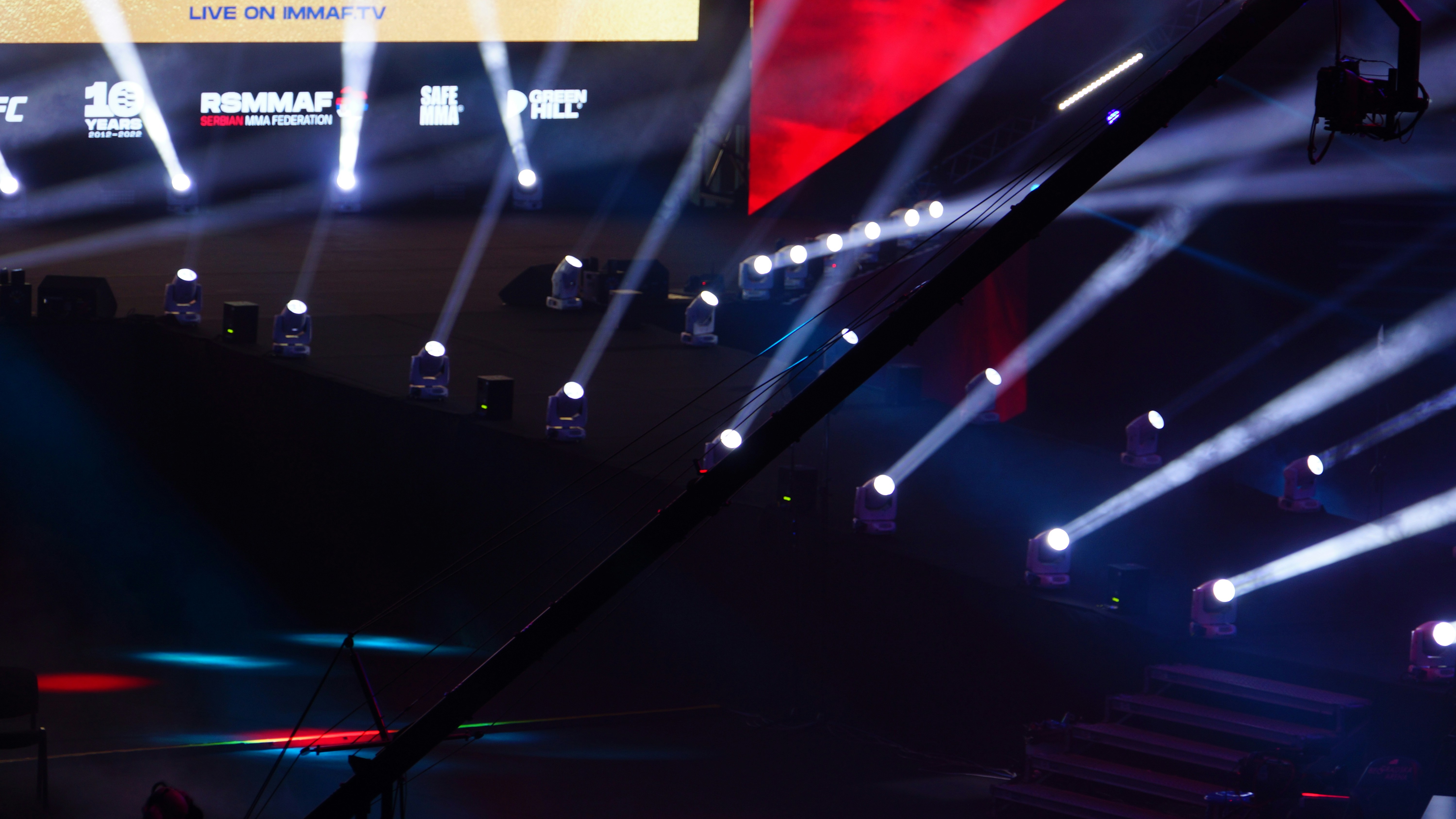
- Moving head light array: 20-50 units
- Wash lights: 30-80 units
- Follow spotlights: 4-8 units
- LED video wall: Dynamic background display
- Audience area effect lights: Create interactive atmosphere
- Fog machine/laser lights: Enhanced special effects
Design Focus:
- Program lighting changes to music rhythm
- Synchronize all lights during climax moments
- Match different color schemes to different music styles
- Interactive audience area lighting enhances participation
AV Production Complete: Lighting & Visual Integration Strategy {#integration}
Successful event production relies on close collaboration between AV and lighting teams. Here’s the professional workflow to ensure smooth integration.
8 Steps for Event AV Planning
Step 1: Needs Assessment & Site Survey (6-8 weeks before event)
Information to Collect:
- ✅ Event type, theme, expected attendance
- ✅ Venue dimensions, ceiling height, power capacity
- ✅ Existing equipment (does venue provide basic equipment)
- ✅ Event schedule, timing
- ✅ Special requirements (live streaming, recording, translation, accessibility)
Site Survey Checklist:
□ Measure venue length, width, height, pillar positions
□ Confirm total power capacity (should be 1.5x total equipment power)
□ Check electrical panel locations, number and types of outlets
□ Assess venue acoustics (reverberation, echo)
□ Confirm projection distance and angle
□ Check lighting rigging points (load capacity)
□ Test internet bandwidth (for live streaming needs)
□ Confirm fire safety, evacuation routes
□ Check loading/unloading routes, equipment access times
Step 2: Budget Planning (6 weeks before event)
AV Production Budget Allocation:
| Item | Percentage | Details |
|---|---|---|
| Audio System | 30-35% | Speakers, microphones, mixing equipment |
| Lighting System | 25-30% | Various fixtures, control systems |
| Video Projection | 20-25% | Projectors, screens, video production |
| Labor Costs | 15-20% | Technicians, director, operators |
| Other Expenses | 5-10% | Transportation, insurance, emergency backup |
Case Study: Medium Corporate Launch (300 people)
- Total Budget: HK$650,000
- Audio: HK$227,500 (35%)
- Lighting: HK$195,000 (30%)
- Video: HK$130,000 (20%)
- Labor: HK$65,000 (10%)
- Other: HK$32,500 (5%)
Step 3: Equipment Selection & Vendor Comparison (5-6 weeks before event)
Supplier Evaluation Criteria:
- Technical Capability: Review portfolio, equipment inventory
- Service Scope: Does it include site survey, design, installation, on-site technical support
- Equipment Age: Main equipment manufacturing date (recommended within 5 years)
- Backup Plan: Does it have backup equipment (audio, projectors must have backups)
- Insurance: Public liability insurance of at least HK$8 million
- Quote Transparency: Are all fees clearly itemized
Compare at least 3 vendors, focusing on:
- Equipment specifications and brands
- Technical staff allocation (at least 2-3 on-site for medium events)
- Tax-inclusive pricing and payment terms
- Contract protection clauses
Step 4: Technical Design & Planning Diagrams (4-5 weeks before event)
Essential Technical Documents:
- Venue Floor Plan: Marking stage, audience area, equipment positions
- Lighting Plot: Fixture types, quantities, rigging positions, projection angles
- Audio Layout: Speaker coverage, mixer position
- Power Distribution Plan: Equipment power requirements, panel distribution
- Signal Flow Diagram: Audio and video signal paths
- Rundown Sheet: Detailed timeline, lighting and sound cue points
Recommended Professional Software:
- Vectorworks Spotlight: Lighting design and visualization
- AutoCAD: Venue floor plan drafting
- QLab: Audio/video playback control
- ShowCaller: Event flow management
Step 5: Content Production & Asset Preparation (3-4 weeks before event)
Video Production Standards:
- Submit script and assets 3 weeks in advance
- Standardized output format: MP4 (H.264), 1920×1080, 25fps
- All videos include 5-second black leader/trailer (for easy transitions)
- Audio normalization: -6dB to -3dB
Presentation Production Checklist:
- Embed fonts or convert to images (avoid font issues)
- Test animations (ensure smooth playback on projector)
- Backup multiple versions (original file, PDF, video file)
- Deliver to technical team 1 week in advance for testing
Step 6: Equipment Testing & Rehearsal (1 week before event)
Dry Run Testing Items:
Day 1 – Equipment Load-in & Setup
- All equipment arrives, assembled, positioned
- Power distribution testing
- Signal cable checking
Day 2 – Technical Testing
- Audio system: Volume balance, feedback elimination, microphone testing
- Lighting system: All fixture functions, color correction, programming
- Video system: Projection clarity, color correction, video playback testing
Day 3 – Full Integration Rehearsal
- Run through complete rundown
- Test all cue point transitions
- Speaker blocking and microphone testing
- Emergency procedure rehearsal (equipment failure backup plans)
Step 7: Official Execution (Event Day)
Time Allocation:
- H-4 hours: Technical team arrives for final checks
- H-2 hours: All equipment on standby
- H-1 hour: Speaker/host technical testing
- H-30 minutes: Pre-show music, lighting preset
- H time: Event officially begins
- H+duration+30 minutes: Equipment strike completed
On-site Technical Team Configuration (Medium Event):
- Technical Director: 1 person (overall coordination)
- Audio Engineer: 1-2 people
- Lighting Engineer: 1-2 people
- Video Engineer: 1 person
- Stage Manager: 1-2 people
- Photography/Videography: As needed
Emergency Response Checklist:
□ Backup microphones (at least 2)
□ Backup projector or spare lamp
□ Backup cables (HDMI, XLR, power cables)
□ Emergency lighting equipment
□ Technical staff emergency contact list
□ Venue fire safety, power personnel contact info
Step 8: Post-Event Review & Documentation (Within 1 week after event)
Tasks to Complete:
- Equipment inventory and return
- Collect on-site photos/video footage
- Write technical report: Document issues and solutions
- Client satisfaction survey
- Financial settlement
- Review meeting: Internal team experience sharing
2025-2026 Industry Trends & Technology Innovation {#trends}
The event AV industry is undergoing rapid transformation. Here are the important trends worth noting.
1. AI-Driven Smart Production
AI Auto-Tracking Lighting Technology
- AI visual recognition automatically tracks speaker movement
- No manual spotlight operation needed, reducing labor costs
- Expected market penetration of 30% by 2025
- Representative Products: Panasonic AI Auto Tracking, Blackmagic ATEM
AI Audio Processing
- Real-time noise reduction, echo cancellation
- Automatic volume balance adjustment
- Smart mixing (automatically detects who is speaking and raises that microphone volume)
2. Hybrid Event Technology
2024 statistics show 68% of corporate events adopted hybrid models, and this trend will continue to strengthen in 2025.
Key Technology Requirements:
- Multi-camera live switching: At least 3 cameras
- Real-time subtitles/translation: AI speech recognition technology
- Virtual backgrounds/AR effects: Enhanced online audience experience
- Interactive features: Real-time Q&A, polling, prize draw integration
Technical Challenges:
- Balance between on-site and online audience experience
- Network bandwidth stability (recommended dedicated line 100Mbps+)
- Audio feedback control (isolate on-site and online audio sources)
3. Sustainability Trends
Carbon Neutral Event Certification
- Starting 2025, international large-scale events begin requiring ISO 20121 certification
- Event carbon footprint calculation becomes standard procedure
Energy-Efficient Equipment Adoption
- LED fixtures now account for 85%+ of the market
- Solar-powered mobile generator applications
- Recyclable/modular stage construction materials
Specific Carbon Reduction Measures:
- Prioritize local suppliers (reduce transportation emissions)
- Digital documentation replaces paper
- Surplus materials donation or recycling mechanisms
4. Immersive Experience Technology
Holographic Projection Technology
- Costs expected to drop 40% in 2025
- Suitable for product launches, virtual character interaction
- Application Examples: Virtual spokespersons, holographic concerts of deceased artists
3D Mapping Projection Shows
- Building facade, stage backdrop 3D projection
- Visual impact combined with music rhythm
- Costs decreasing annually, affordable for medium-sized events
LED Floor Screens
- Interactive floor displays
- Suitable for fashion shows, car launches
- Rental price: HK$6,500-12,000/square meter/day
5. 5G & Cloud Technology Applications
5G Real-time Transmission
- Ultra-low latency (<20ms) enables true real-time interaction
- Multi-channel 4K video simultaneous transmission
- Remote equipment control (cloud-based lighting, audio consoles)
Cloud Collaboration Platforms
- Team members remotely co-edit rundowns
- Real-time document synchronization
- Representative Tools: Google Workspace, Microsoft Teams, Miro
Event AV Production FAQ {#faq}
Q1: What is the typical budget for event AV production?
A: Budget ranges vary significantly depending on event scale and requirement levels:
- Small Events (50-100 people): HK$65,000-160,000
- Basic audio, 1-2 projectors, simple lighting
- Medium Events (100-500 people): HK$240,000-800,000
- Professional audio system, multiple projectors/LED screens, dynamic lighting
- Large Events (500+ people): HK$1,200,000+
- Line Array audio, large LED walls, complex light shows, live streaming equipment
Budget Allocation Recommendation: Audio 35%, Lighting 30%, Video 20%, Labor 10%, Other 5%
Q2: How to choose a suitable AV production company?
A: When evaluating suppliers, review these 8 key indicators:
✅ Professional Capability Assessment
- Portfolio: Request similar event case studies (videos, photos)
- Equipment Inventory: Check main equipment brands and manufacturing dates (recommended within 5 years)
- Technical Certifications: Do engineers have professional licenses
✅ Service Scope Confirmation 4. Complete Service: Site survey → Design → Installation → On-site technical support → Strike 5. Staff Allocation: Number of on-site technical staff (medium events need at least 4-6 people) 6. Backup Plan: Does it have backup equipment (microphones, projectors essential)
✅ Contract Protection 7. Insurance Certificate: Public liability insurance at least HK$8 million 8. Penalty Clauses: Compensation mechanism for equipment failure, inability to complete on time
Comparison Tips: Get at least 3 quotes, focus on comparing equipment specifications (not just price), be cautious if price differences are excessive (±30% or more) – check equipment grade or hidden costs.
Q3: How far in advance should AV planning begin?
A: Recommended timeline:
| Event Scale | Advance Time | Reason |
|---|---|---|
| Small Events (<100 people) | 3-4 weeks | Equipment booking, basic planning |
| Medium Events (100-500 people) | 6-8 weeks | Site survey, design, rehearsal time |
| Large Events (500+ people) | 3-6 months | Complex design, custom content production |
Key Timeline Milestones:
- Weeks 8-6: Site survey, requirements confirmation, vendor comparison
- Weeks 6-4: Contract signing, technical design, content production
- Weeks 4-2: Asset preparation, equipment confirmation
- Weeks 2-1: Equipment load-in, testing, rehearsal
- Week 1: Final adjustments, official execution
⚠️ Special Period Note: Lunar New Year, year-end peak season (Nov-Dec), major exhibition periods – equipment and staff are in high demand. Recommend planning 1.5-2x earlier.
Q4: How to ensure AV equipment doesn’t fail on event day?
A: Professional teams implement these 5 layers of protection:
Layer 1: Equipment Selection
- Use commercial/professional grade equipment (not consumer grade)
- Main equipment manufactured within 5 years
- Prioritize brands with backup support
Layer 2: Backup Equipment
- Microphones: At least 2 spare wireless microphones
- Projectors: Important events must have backup or spare lamp
- Cables: 2-3 spares of each cable type
- Laptop: Backup playback computer
Layer 3: Advanced Testing
- Complete Dry Run 1-2 days before event
- Test all equipment functions
- Simulate complete flow and cue point transitions
- Failure drill (what if projector breaks)
Layer 4: On-site Monitoring
- Technical director monitors equipment status throughout
- Audio and lighting engineers each handle their domain
- Establish internal team communication system (walkie-talkies)
Layer 5: Emergency SOP
Equipment Failure Response Process:
1. Immediately switch to backup equipment (< 30 seconds)
2. Technicians troubleshoot failure
3. Adjust flow if necessary (communicate with host/client)
4. Post-event review and improvement
Statistics: Professional teams have major technical failure rates below 2%.
Q5: What special considerations for hybrid events (online + offline)?
A: Hybrid events have higher technical difficulty, requiring special attention to:
🎥 Live Streaming Technical Specs
- Network Bandwidth: Recommended dedicated line 100Mbps+ (upload at least 50Mbps)
- Backup Network: 4G/5G hotspot backup
- Streaming Platform: YouTube, Zoom, Teams or professional platforms
- Video Quality: 1080p 60fps or 1080p 30fps
🎤 Audio Challenge Solutions
- Echo Control: On-site and online audio sources must be completely isolated
- Volume Balance: Volume for online audience needs independent adjustment
- Noise Reduction: Use AI noise reduction software for on-site ambient noise
👥 Two-way Interaction Design
- Online Q&A Integration: Display online audience questions in real-time
- Polls/Surveys: Use tools like Slido, Mentimeter
- Social Wall: Integrate social media interactions
📹 Multi-camera Switching
- At least 3 cameras: Wide shot, speaker close-up, presentation screen
- Professional director switching (avoid frequent jumping causing dizziness)
- Subtitle overlay: Speaker names, presentation key points
⚠️ Common Mistakes: ❌ Only focusing on on-site experience, neglecting online audience (monotonous visuals, poor audio) ❌ Insufficient network bandwidth causing disconnections ❌ No dedicated person managing online interactions
Budget Recommendation: Hybrid event technical costs are 30-50% higher than pure on-site events.
Q6: What special challenges for outdoor event AV production?
A: Outdoor events face more uncontrollable factors requiring extra planning:
☀️ Weather Response
- Rain Protection: All equipment needs waterproof covers, tent protection
- Sun/Heat Management: Projectors, computers avoid direct sunlight overheating
- Wind Securing: Stage, light stands reinforced (sandbags, ground stakes)
- Backup Plan: Storm backup (indoor backup venue or postponement mechanism)
⚡ Power Planning
- Generator: Calculate total power consumption × 1.5x
- UPS System: Protect critical equipment
- Voltage Stabilizer: Avoid voltage instability damaging equipment
🔆 Sunlight Issues
- Projection Brightness: Requires 10,000+ lumens (typical indoor 5,000 lumens)
- LED Screen Priority: Unaffected by sunlight
- Schedule Planning: Important content scheduled after sunset
🔊 Audio Challenges
- Open Space Diffusion: Requires higher power audio
- Noise Control: Confirm local decibel limits (typically 85-90dB)
- Wind Interference: Microphones with windscreens
🪲 Environmental Factors
- Insect Interference: Lights attract flying insects (use yellow light to reduce)
- Uneven Ground: Stage, truss needs leveling
- Surrounding Interference: Traffic noise, construction noise uncontrollable
Budget Recommendation: Outdoor events cost 50-80% more than indoor (due to equipment protection, power, transportation needs).
Q7: How to evaluate if AV equipment audio and video quality meets requirements?
A: Here are objective evaluation standards:
🔊 Audio System Assessment Indicators
| Indicator | Standard Value | Explanation |
|---|---|---|
| Frequency Response | 50Hz-18kHz | Covers vocal and music frequencies |
| Maximum SPL | 95-105 dB SPL | Medium to large event requirements |
| Coverage Angle | Horizontal 60-90° | Ensures all audience members hear |
| Latency | <30ms | Audio-video sync standard |
Testing Methods:
- Clarity Test: Play vocal content, check if every word is clear
- Volume Uniformity: Measure volume at various venue corners (difference <5dB)
- Low Frequency Test: Play music to confirm bass is full but not overwhelming
- Feedback Test: Gradually increase microphone volume, confirm no squealing
📽️ Projection/Screen Assessment Indicators
| Indicator | Standard Value | Explanation |
|---|---|---|
| Brightness | Indoor 3000+ lumens<br>Outdoor 10000+ lumens | Ensures clear visibility |
| Contrast Ratio | 5000:1+ | Clear black and white distinction |
| Resolution | Full HD (1920×1080) minimum | 4K better |
| Color Accuracy | ΔE < 3 | Professional standard |
Testing Methods:
- Clarity: Display small text test pattern (minimum 16pt should be clear)
- Color: Check if white is yellowed/bluish, if red is vivid
- Uniformity: Full white screen check for dark corners
- Distance Test: Confirm visibility from furthest audience seat
💡 Lighting Assessment
- Illuminance: Stage main area 800-1200 lux
- Color Temperature: Confirm consistency with brand colors/event theme
- No Flicker: Camera footage should show no flashing
Professional Advice: Always test on-site before official event, don’t just trust spec sheets.
Q8: Will AI automation replace AV technicians?
A: Not completely in the short term (5-10 years), but will change work patterns:
🤖 AI Will Replace
- Basic lighting tracking (AI auto-tracking replaces manual follow spots)
- Repetitive tasks (preset lighting scene switching)
- Simple volume adjustments (AI auto-mixing)
- Standardized procedures (event flow automation)
👨💻 Still Requires Human Expertise
- Creative Design: Lighting visual concepts, atmosphere creation
- Real-time Response: Handling emergencies (equipment failure, flow adjustments)
- Artistic Judgment: Musical rhythm sense, emotional control
- Client Communication: Requirements clarification, expectation management
📊 Industry Trend Forecast (2025-2030)
- Small to medium standardized events: AI automation reaches 60%
- Large custom events: Still require professional team leadership
- Technician role transformation: From operator → Designer/supervisor
💡 Advice for Practitioners
- Learn AI tool operation (rather than resist)
- Strengthen creative and design capabilities (cannot be replaced by AI)
- Develop cross-disciplinary skills (lighting+video+programming)
- Enhance project management and communication abilities
Conclusion: AI is a tool, not a replacement, allowing professionals to focus more on creativity and high-value work.
Summary: Core Principles for Successful Event AV Production
Successful event AV production is not just about stacking technology, but the perfect combination of art, technology, and strategy.
Core Principles Review:
- Advance Planning: Start preparing at least 6-8 weeks ahead
- Professional Division: Audio, lighting, video each handle their domain
- Backup Plans: Critical equipment must have redundancy
- Complete Testing: Dry Run cannot be skipped
- Continuous Learning: Follow latest industry trends
ROI: Professional AV production can increase event satisfaction by 60%+, with significant brand image enhancement effects – absolutely a key investment area.
Additional Resources
Recommended Learning Platforms:
- Lynda / LinkedIn Learning: Lighting design, audio engineering courses
- YouTube Channels: Churchfront, Sweetwater, B&H Photo
- Professional Forums: Gearslutz, AVS Forum
Industry Organizations:
- Hong Kong Event & Production Association
- International Live Events Association (ILEA)
- United States Institute for Theatre Technology (USITT)
Regular Exhibitions (Equipment & Technology Updates):
- Hong Kong International Audio Visual and Lighting Exhibition
- Prolight + Sound Frankfurt, Germany
- NAB Show Las Vegas, USA
Article Last Updated: December 2025
Author Expertise: Event Production Technical Consultant, AV System Integration
Contact for Collaboration: [Your Contact Information]
Related Articles:
- “Complete Hybrid Event Technology Guide”
- “5 Most Common Event Audio Mistakes & Solutions”
- “LED vs Traditional Lighting: How to Choose the Best Solution”
- “Event Budget Allocation Guide: Spending Wisely”
Free Downloadable Resources: 📥 Event AV Planning Checklist (PDF) 📥 Site Survey Form Template (Excel) 📥 Rundown Timeline Template (Google Sheets)
All data and prices in this article are 2024-2025 Hong Kong market reference values. Actual situations may vary due to region, exchange rates, and supply-demand conditions. Please confirm with actual quotes.

發表迴響